


A few months back I was chatting with a guy who runs a small regional trucking operation — three trucks, mostly short-to-medium haul routes. He mentioned almost in passing that he’d just put a deposit on an electric truck for one of his routes. I was honestly surprised. Trucking is one of those industries that feels permanently tied to diesel, and yet here was a guy who’s not some early-adopter tech enthusiast, just a practical business owner, making the switch.
That conversation sent me down a research hole, and the numbers I found genuinely changed how I think about this category. If you run a fleet, drive professionally, or are just curious about where freight is headed, this is worth your time.
The growth numbers are honestly wild
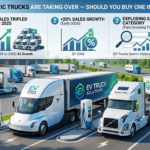
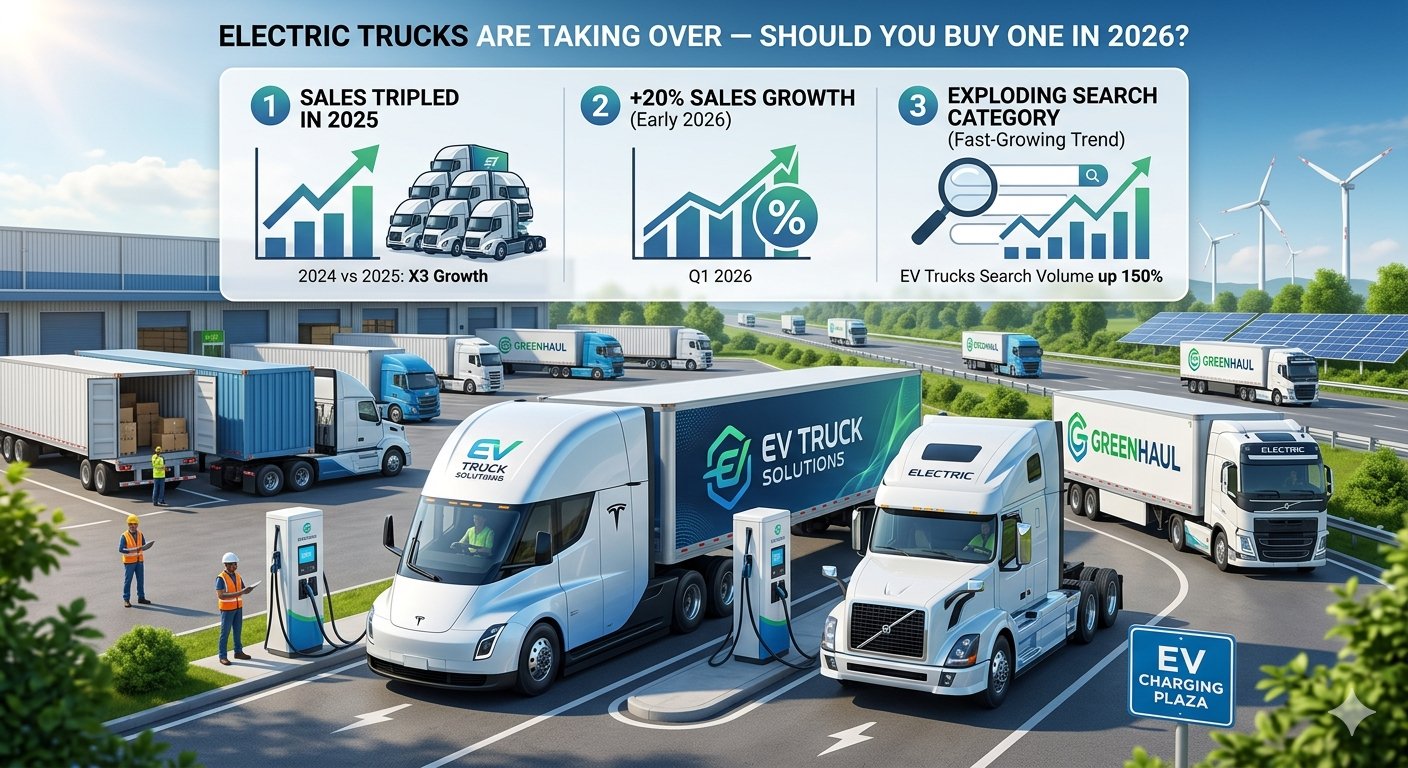
Let’s start with the big one. Sales of electric heavy freight trucks almost tripled year-on-year, jumping from around 84,000 units in 2024 to a record 230,000 in 2025. That’s not gradual growth — that’s the kind of curve that usually means an industry has crossed some kind of tipping point.
And it’s not just heavy trucks. Electric medium freight trucks grew 65% year-on-year to reach 210,000 units in 2025, and overall electric truck sales exceeded 400,000 for the first time, doubling compared to the previous year. Globally, electric trucks now make up 9% of all truck sales — surpassing the EV share for both buses and light commercial vehicles.
To put that 9% in perspective: electric heavy freight truck share jumped from just over 3% in 2024 to 9% in 2025 — nearly tripling its share of the market in a single year.
Where this growth is actually happening
If you’re picturing this as a global, evenly-spread phenomenon, it’s not — and that matters for what “should I buy one” means depending on where you live.
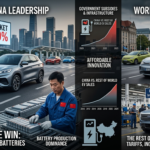
The majority of global electric truck sales growth came from China, where sales more than doubled in 2025, following a similar pattern to 2024. In fact, China’s electric heavy trucks grew from a niche segment to over a quarter of all new truck sales in early 2026 — that’s a genuinely staggering shift for an industry that’s traditionally been one of the hardest to electrify.
That growth in China has been supported by a combination of government subsidies, high diesel prices, and rapidly expanding charging networks — basically all three of the major barriers to electric trucking (cost, fuel economics, and infrastructure) moving in the same direction at once.
Europe is following, though at a more measured pace. Electric medium and heavy freight truck sales in Europe increased by around 40% in 2025, reaching a 3% market share. That’s a much smaller share than China’s, but a 40% growth rate in a single year is still a meaningful acceleration.
The economics — this is the part that actually matters for a buying decision
Here’s where I think a lot of people get stuck on the wrong number. Yes, electric trucks cost more upfront. But the total cost of ownership conversation is where this gets interesting.
According to CATL’s commercial vehicle sales director, an electric truck can save fleet operators up to 1.2 million yuan — roughly $165,000 USD — over a ten-year life cycle compared to an equivalent diesel truck. That’s not a small number, and it’s coming from a battery manufacturer with direct visibility into fleet economics, not just a marketing projection.
This tracks with what my trucking-operator friend told me too — his calculation wasn’t about being green, it was straightforwardly about fuel and maintenance costs over the life of the vehicle. Diesel trucks have a lot of moving parts (literally) that electric drivetrains simply don’t need to worry about.
Market size — this isn’t a niche bet anymore
If you’re wondering whether this is a flash-in-the-pan trend or something with real staying power, the market projections suggest the latter. The electric heavy-duty truck market was valued at roughly $17 billion in 2025 and is projected to grow to $25.25 billion in 2026, eventually reaching nearly $153 billion by 2035 — a compound annual growth rate of over 22%.
Within that, the Class 8 segment — trucks with a gross vehicle weight rating above 33,000 pounds, the big rigs used for long-haul freight — is expected to grow particularly fast, driven by improvements in range, charging speed, and overall reliability that are finally making long-haul electric trucking viable rather than just theoretical.
Who’s actually buying these — and why it matters for you
Major logistics players like FedEx, Amazon, and Walmart are already adopting electric trucks specifically to cut both carbon footprint and fuel costs, particularly for urban delivery and high-frequency operations. When companies operating at that scale start making this shift, it tends to pull the entire supporting ecosystem — service networks, charging infrastructure, parts availability — along with it.
That matters if you’re considering buying one yourself, because one of the biggest practical concerns with electric trucks has always been: “what happens when something breaks and there’s no specialized mechanic nearby?” As adoption scales, that concern gets smaller every year, simply because more trucks on the road means more shops equipped to service them.
The honest limitations — because “everything’s perfect” would be misleading
I want to be upfront about where the catches are, because pretending electric trucks are flawless wouldn’t be fair to you.
Long-haul remains the harder use case. Limited charging availability poses real challenges for long-haul trucking operations that require prolonged periods of driving without access to charging infrastructure. If your routes are mostly regional or urban, this is less of an issue. If you’re doing genuine cross-country long-haul, charging infrastructure for heavy trucks still has gaps.
Upfront cost remains a real barrier. High upfront production costs — driven by large-capacity batteries, specialized drivetrains, and retooled manufacturing lines — remain a key barrier to adoption. The long-term savings are real, but you need the capital (or financing) to get there first.
Segment-by-segment, adoption isn’t uniform. The Class 7 segment currently dominates the heavy-duty electric truck market with nearly 63% share, while Class 8 — the true long-haul big rigs — is still catching up. So if you’re specifically looking at long-haul Class 8 trucks, you’re buying into a segment that’s earlier in its adoption curve than medium-duty trucks.
So — should YOU buy one in 2026?
Honestly, it depends heavily on your use case, and I’d break it down like this:
If you run short-to-medium haul routes, especially urban or regional delivery, the economics increasingly favor electric — lower running costs, growing charging infrastructure, and a maturing service ecosystem all point in your favor. This is also the segment where adoption is furthest along, meaning more model choices and more operational data from other fleets to learn from.
If you’re specifically in long-haul Class 8 territory, I’d say “watch closely, but don’t feel behind if you wait.” The segment is growing fast, but the charging infrastructure for true long-haul routes is still catching up to the vehicles themselves. A year or two of additional infrastructure buildout could make a meaningful difference to how practical this is for your specific routes.
If you’re in China or a market with strong subsidy support, the calculus shifts more aggressively in favor of buying now — the subsidies, fuel price dynamics, and charging network expansion are all currently aligned in a way that’s harder to find elsewhere.
My honest takeaway
What struck me most while researching this wasn’t any single statistic — it was how consistently every data point pointed the same direction. Sales nearly tripling, market share jumping from 3% to 9% in a single year, major logistics companies adopting at scale, and a ten-year cost-of-ownership case that’s increasingly hard to ignore. This isn’t a “someday” technology anymore. For a growing slice of fleet operators, “someday” has already arrived — the only real question is whether your specific routes and budget put you in that slice yet, or close to it.