

Two years ago, my sister-in-law point-blank refused to even test-drive an EV. “What if I get stuck somewhere?” she said, like the car was going to maroon her on a highway shoulder in the middle of nowhere. Last month, she drove her new EV six hours to a family wedding, stopped once for coffee, and didn’t think twice about it.
That shift — from “what if I run out” to “didn’t think twice” — is basically the whole story of where EVs are in 2026. I wanted to actually dig into the numbers behind that feeling, because anecdotes are nice but data is better. And honestly, the data backs up what my sister-in-law experienced.
The range numbers are quietly getting really good
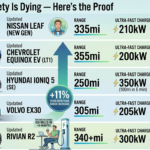
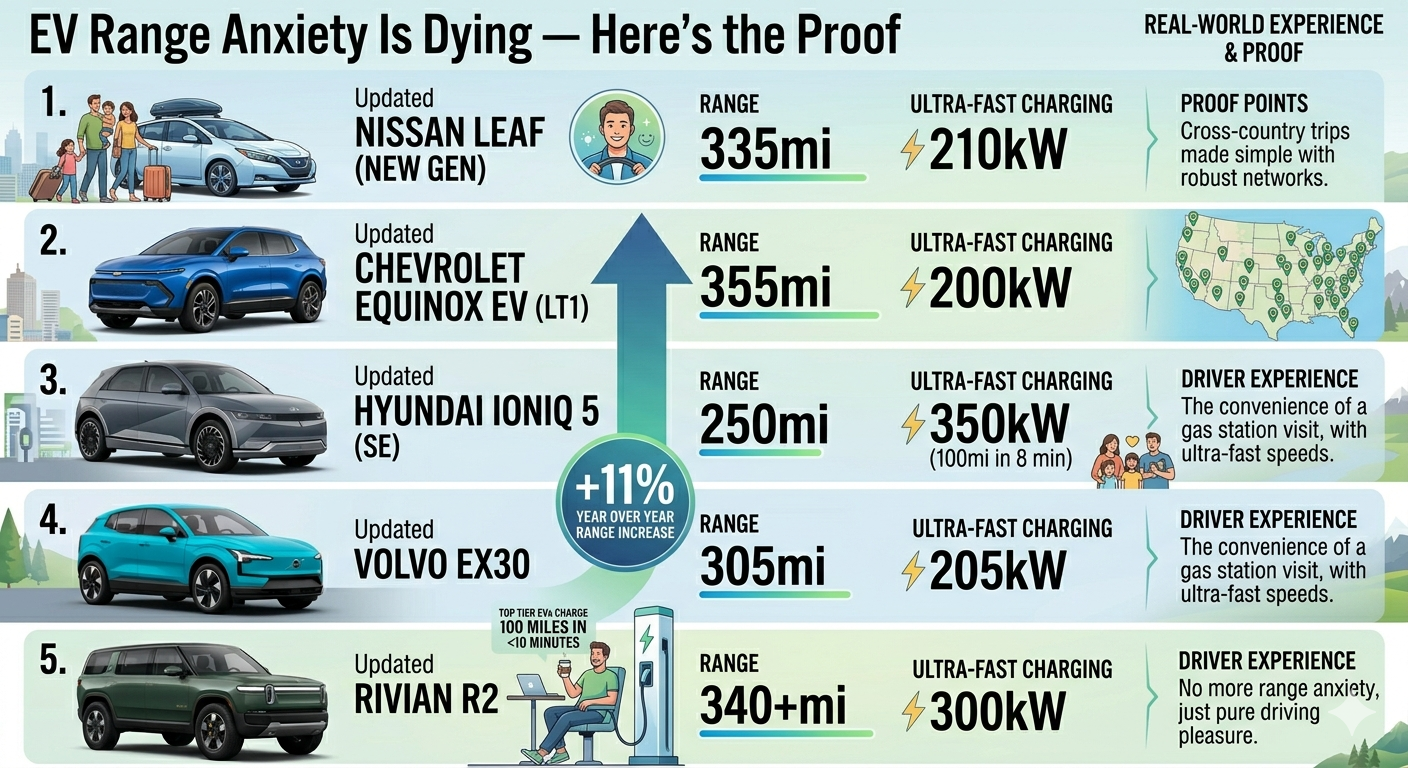
Here’s the headline stat that caught my attention: real-world range across 2026 EV models is up 11% year over year, with the average now sitting at 325 miles.
Let that sink in for a second. 325 miles is roughly the distance from one major city to another in most countries — that’s not “around town” range, that’s “leave in the morning, arrive for lunch, plenty left over” range.
And this isn’t some cherry-picked flagship number either — it’s an average. That means a huge chunk of the EVs rolling off lots right now comfortably clear 300 miles on a charge.
Charging speed is the part that actually changes how road trips feel
Range matters, but honestly, the bigger shift for how EVs feel to live with is charging speed. The fastest charging EVs in 2026 can now add 100 miles of range in under 10 minutes — which is genuinely close to “grab a coffee and you’re back on the road” territory.
I looked into specific real-world tests rather than just manufacturer claims, because — let’s be honest — manufacturer numbers and real life don’t always match up. Here’s what stood out:
The Hyundai Ioniq 5 is currently the fastest in real-world testing. It adds 100 miles in about 5.79 minutes at peak, even though its real-life time tends to land closer to 8-9 minutes once you account for the charging curve. Worth noting — the car is rated for 350 kW charging, but in actual tests it caps out around 235-240 kW, which is the vehicle’s real peak acceptance rate rather than the charger’s rating. That’s an important distinction if you’re comparing spec sheets — the charger rating and what your car can actually pull are two different numbers.
The Hyundai Ioniq 6 isn’t far behind, adding 100 miles in about 7.43 minutes thanks to its aerodynamic shape, which means each kilowatt of charging translates into more actual miles.
The Porsche Taycan holds its own too — it adds 100 miles in roughly 8.06 minutes, helped by an 800-volt architecture and thermal management that keeps charging speeds high for longer than most EVs.
And in independent testing, the 2026 Mercedes-Benz CLA 350 actually beat its own manufacturer’s charging claim — Mercedes listed 320 kW peak, but testers recorded an actual peak of 349 kW, with the car adding 100 miles in 9 minutes and 11 seconds. That’s the kind of “the car does better than promised” story you don’t hear often enough.
Why this matters beyond the spec sheet
Here’s where I think the bigger story is hiding. These improvements don’t show up in quarterly sales charts, but they show up every single day for the people actually driving these cars.
Think about what that actually means in practice. A road trip that used to require careful planning — mapping out charging stops, padding extra time, worrying about whether a charger would be free or working — increasingly just… doesn’t require that anymore. You stop when you’d normally stop anyway (bathroom, food, stretch your legs), and by the time you’re back in the car, you’ve added enough range to keep going.
The “but what about winter” question — let’s actually talk about it
I’d be doing you a disservice if I just said “everything’s perfect now,” because cold weather is still the honest asterisk on all of this.
Real-world winter testing shows the gap is real but manageable. In one test, a Nissan Leaf at 38°F traveled 215 miles at 70 mph — about 17% less than its EPA rating, averaging roughly 7.6% below official efficiency. Meanwhile, the Hyundai EV4 managed 390 km in brutal cold conditions — over 65% of its rated figure, placing it among the top performers in that test.
European testing tells a similar story. In a simulated Munich-to-Berlin winter drive at 0°C and Autobahn speeds, average winter energy consumption was 57% above the WLTP rating across tested vehicles. But here’s the encouraging part — the Tesla Model Y had the smallest winter consumption increase of any car tested, at just 40% above WLTP, and the Audi A6 Avant e-tron topped the winter test with 441 km of real range, and its 800V charging added 300 km in just 20 minutes — the best charging recovery in the entire test.
So yes, cold weather still takes a bite out of range — that hasn’t magically disappeared. But the bite is smaller than it used to be, and fast charging means you can recover that lost range quickly if you need to.
Practical tips if you want to squeeze out extra range (these actually work)
I dug up some genuinely useful tips that aren’t the usual generic advice:
Slow down slightly on highways. Dropping your speed from 75 mph to 65 mph can increase range by 15-20%, and on a 200-mile trip, that only costs you 15-20 minutes of extra travel time. That’s a trade most people would happily make if they actually thought about it that way.
Use seat heaters instead of blasting the cabin heater in winter. Heated seats and steering wheels use just 50-100 watts each, compared to 3,000-5,000 watts for cabin heating — that’s a massive difference in winter range, and honestly, heated seats feel cozier anyway.
Park in a garage when you can, even an unheated one. An unheated garage is typically 10-20°F warmer than outside, which reduces how much energy your battery uses for cooling and preconditioning.
Don’t let your battery sit too low in cold weather. Keeping your battery above 20% and charging to around 80% keeps it in its optimal temperature and voltage range, which helps both range and charging speed.
What’s coming next — and why the trend is only accelerating
If you’re wondering whether this is a temporary blip or an actual trend, the signs point pretty firmly toward “this keeps getting better.” By 2026, ultra-fast charging stations delivering 350 kW or more are becoming standard across major highways and urban centers, with networks like Tesla’s Supercharger V4, Electrify America, and Ionity expanding this coverage significantly.
On the vehicle side, manufacturers are pushing hard on both range and charging speed simultaneously. Toyota’s redesigned bZ now offers up to 314 miles of range with a new 74.7-kWh battery, and charges from 10% to 80% in about 30 minutes on a fast charger — a meaningful jump for a mainstream, non-luxury model.
Even bigger, heavier vehicles are getting in on this. The BMW iX3 50 xDrive can add 185 miles of range in just 10 minutes despite having a large 108.7 kWh battery and 434-mile EPA range, and the Mercedes GLC EQ adds 188 miles of WLTP range in 10 minutes with a 443-mile total range.
My honest take
I think the “range anxiety” conversation is stuck about two years in the past for a lot of people. The cars that are actually shipping right now — not concept cars, not “coming in 2030” promises — are hitting 300+ mile averages with charging speeds that turn a “fill-up” into something closer to a bathroom break.
Is it perfect? No. Cold weather still matters, charging infrastructure still isn’t evenly distributed everywhere, and if you’re doing serious winter road trips, you’ll want to plan a bit more carefully than you would with a gas car. But “a bit more carefully” is a completely different conversation than “I might get stranded,” and that’s the shift that’s actually happened.
If you’ve been holding off on an EV because of range worries from a few years back, it might genuinely be worth taking another look at where things stand now — the car that disappointed you in 2022 isn’t the car you’d be buying today.