



By a tech blogger who almost bought a gas car three months ago — and is really glad he didn’t
I was sitting at a Shell station in late March, watching the pump tick past $68 for a half-tank of regular, and I genuinely felt a little sick. Not just from the price — but because I’d been this close to trading in my old hybrid for a new gas-powered sedan back in January when prices were still hovering around $2.90 a gallon.
Then the conflict in the Strait of Hormuz happened, oil shot past $100 a barrel, and here we are: the national average just crossed $4.22 per gallon — the highest it’s been since the summer of 2022.
So yeah. Suddenly everyone and their uncle is Googling “should I buy an EV” again.
I get it. I’ve been through this cycle before — 2022 was the last time I seriously looked at switching. I didn’t pull the trigger then, and I’ve been running the math every few months since. This time around, I actually went deep on the numbers, talked to a few EV owners in my neighborhood, and test-drove three different models. Here’s everything I wish someone had told me before I started.
What’s Actually Happening at the Pump Right Now
Let’s not sugarcoat it. Gas prices went from roughly $2.90 in mid-February to over $4.20 by late April — a jump of about 33% in less than two months. The trigger was the disruption to oil flows through the Strait of Hormuz following the US-Iran conflict, which drove Brent crude above $100 a barrel and has kept it there.
That’s not a temporary blip from a holiday weekend. That’s a structural supply shock, and analysts aren’t expecting prices to crash back to three bucks anytime soon.
If you’re driving 15,000 miles a year in a car that gets 28 MPG, you’re now spending roughly $2,250 a year just on gas at $4.20 a gallon — compared to about $1,350 a year when gas was $2.93 back in February. That’s $900 more per year, evaporated in a matter of weeks.
That’s what’s making people take EV math seriously again.
The Real Cost Comparison: EV vs. Gas in 2026
Before I get into the table, one thing I had to unlearn: the purchase price isn’t the whole story. The total cost of ownership is what actually matters, and that’s where EVs have been quietly eating gas cars alive for years.
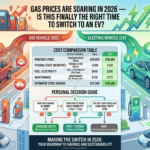
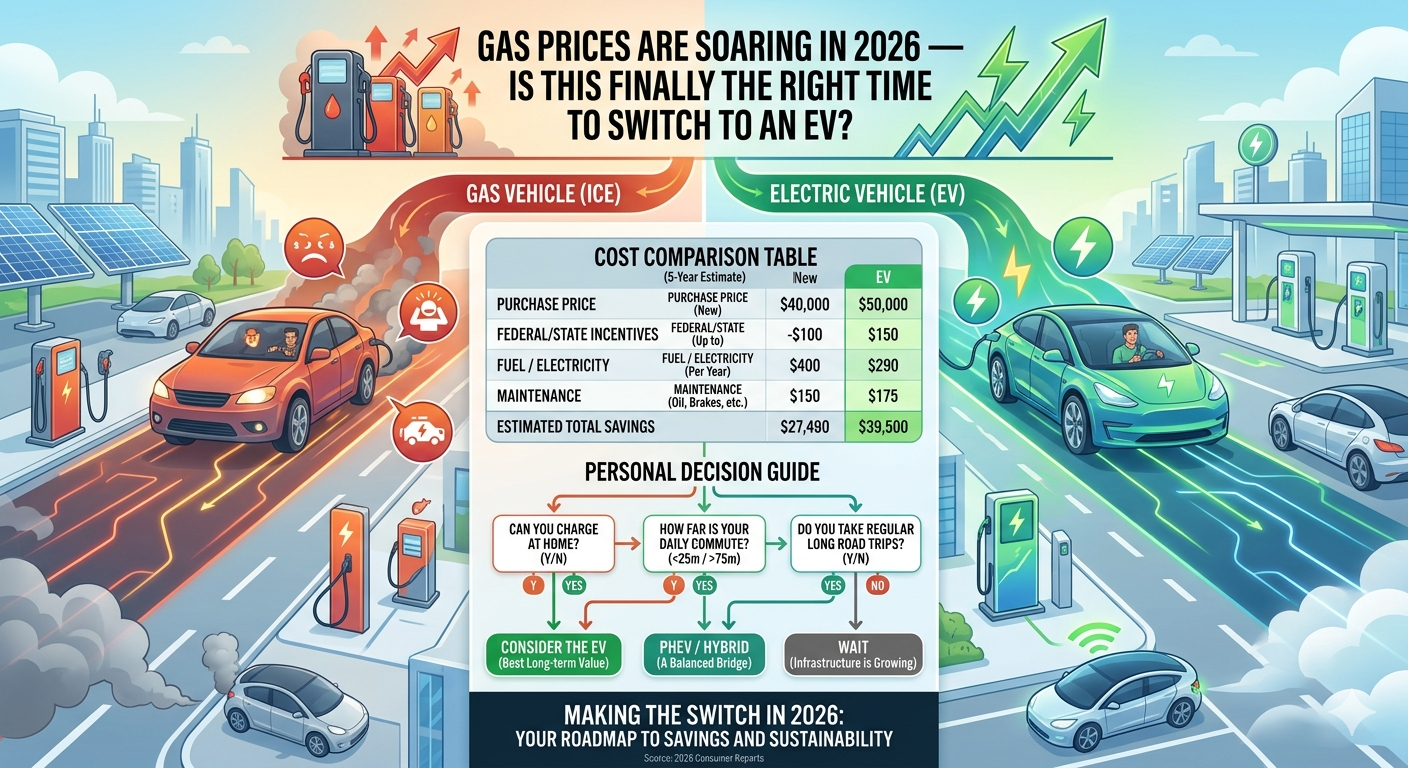
Here’s how the numbers stack up for a typical driver doing 15,000 miles per year:
💰 5-Year Total Cost of Ownership Comparison
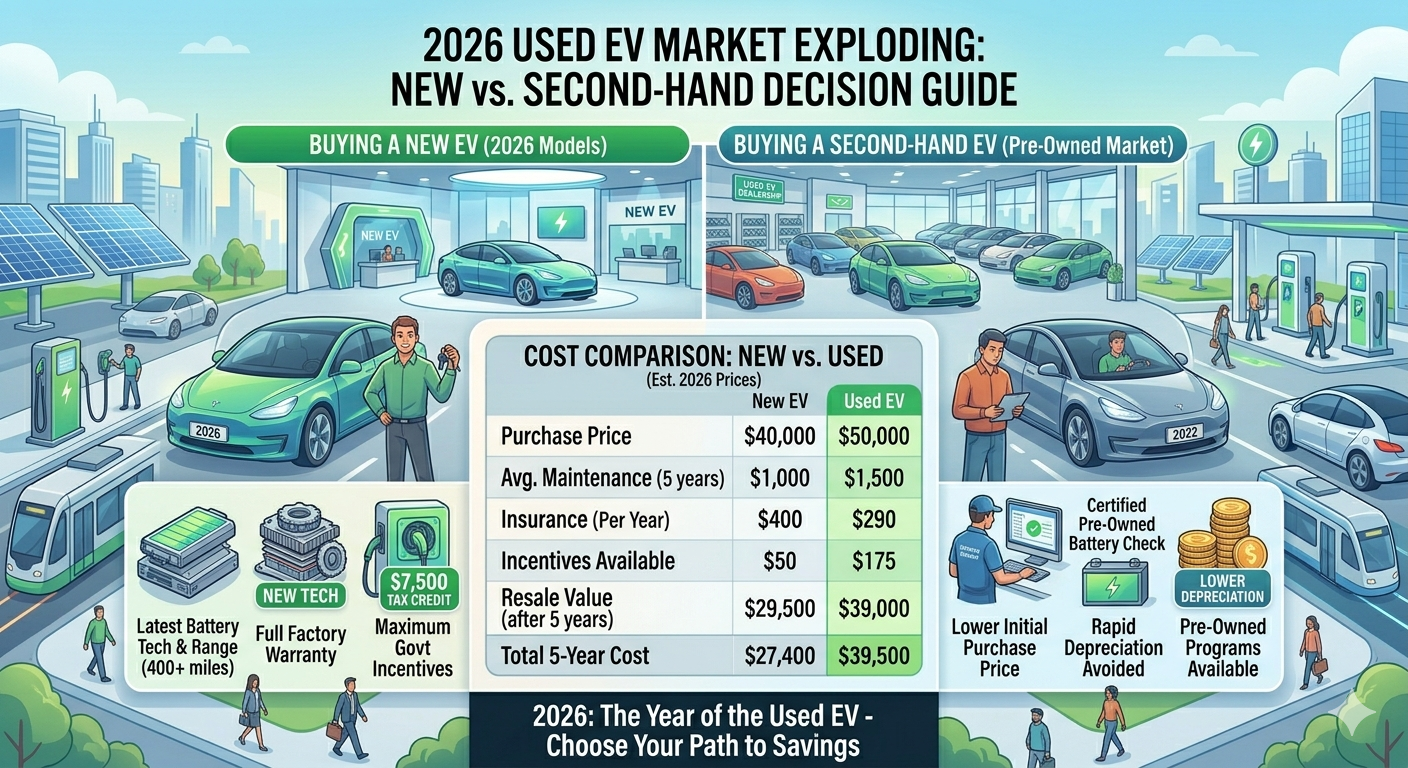
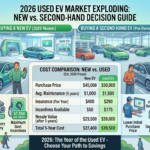
| Cost Category | Mid-Range Gas Car | Mid-Range EV (New) | Used EV |
|---|---|---|---|
| Purchase Price | ~$45,000 | ~$54,500 | ~$34,650 |
| Federal Tax Credit | $0 | $0 (expired Sept 2025) | $0 |
| Annual Fuel Cost | ~$2,250/yr | ~$600/yr* | ~$600/yr* |
| 5-Year Fuel Total | ~$11,250 | ~$3,000 | ~$3,000 |
| Annual Maintenance | ~$1,200/yr | ~$600/yr | ~$700/yr |
| 5-Year Maintenance | ~$6,000 | ~$3,000 | ~$3,500 |
| Insurance (annual) | ~$1,800 | ~$2,100 | ~$1,600 |
| 5-Year Insurance | ~$9,000 | ~$10,500 | ~$8,000 |
| 5-Year Grand Total | ~$71,250 | ~$71,000 | ~$49,150 |
*Based on home charging at ~$0.13/kWh average, ~4 miles per kWh, 15,000 miles/year
A few things jump out from this table:
New EVs are at near-parity with gas cars over 5 years. That’s a huge shift from even two years ago. Cox Automotive reported that the average transaction price gap between new EVs and gas cars hit a record low in early 2026 — about $4,500 — and when you factor in fuel and maintenance savings, it essentially washes out.
Used EVs are the sleeper deal of 2026. This is the one I didn’t see coming. The used EV market has been flooded with lease returns — Edmunds expects that share to hit 8% of used EVs in 2026, up from just 2% last year. The average used EV is now going for around $34,650, and 44% of used EVs sold in March went for under $25,000. That’s genuinely wild. I talked to a guy in my neighborhood who picked up a 2023 Chevy Equinox EV for $22,000 in April. He’s paying about $47/month in electricity to drive it.
What About That $7,500 Tax Credit?
Yeah, this one stings. Congress let the federal EV tax credit expire in September 2025, and it hit EV sales hard — new EV purchases dropped about 27% year-over-year in Q1 2026. So if you’re buying new, you’re not getting that federal help anymore.
A few states still have their own credits (Colorado is offering $5,000, California has various rebates through their Clean Vehicle Assistance Program), so check your state before you write off incentives entirely. Tools like PlugStar and the AFDC Alternative Fuels Station Locator are genuinely useful for this.
But honestly? The federal credit expiring has pushed more buyers toward the used market, which is where the real value is sitting right now anyway.
The Stuff Nobody Talks About Until You Own One
I’ve spent enough time with EV owners to know there are things the sales brochures quietly skip.
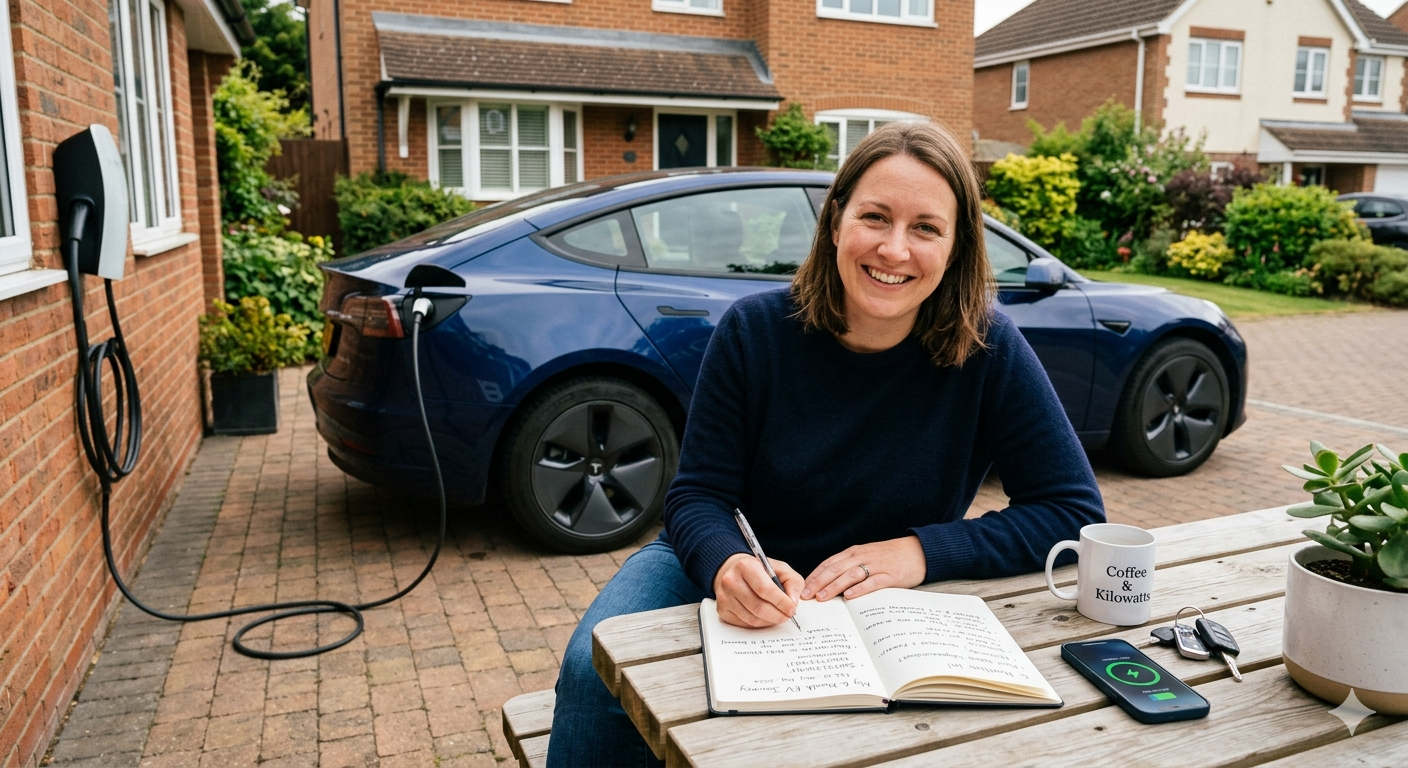
Home charging is everything. If you live in a house or apartment with a dedicated parking spot and can install a Level 2 charger (runs about $700–$1,200 installed), your life changes. You wake up every morning with a “full tank.” No detours, no waiting. But if you’re in a dense urban apartment without guaranteed access to your own outlet, this gets complicated fast. Public charging is getting better — Tesla’s Supercharger network has opened up to more brands, and ChargePoint has expanded significantly — but it’s still not the frictionless experience of a gas station.
Range anxiety is mostly a 2019 problem. Most of the EVs hitting the used market now get 250–300 miles of real-world range. Unless you’re regularly doing long road trips, a charge every few days is plenty. That said, road trips do require planning through apps like A Better Route Planner (ABRP), which is actually pretty good once you get used to it.
Maintenance is weirdly zen. No oil changes. No transmission fluid. Fewer brake jobs because regenerative braking does most of the work. My buddy who bought a Model 3 in 2022 says his biggest maintenance cost so far has been a cabin air filter and new wiper blades. That’s it. Over three years.
Insurance can be higher. This caught me off guard. EVs can cost more to insure because repair costs are higher and some insurers are still figuring out how to price battery damage. Shop around — I’ve seen big differences between carriers for the same car.
Models Worth Looking At Right Now
The new EV lineup took a hit when several automakers pulled models amid the policy chaos of late 2025. But here’s what’s actually available and selling well:
New EV picks:
- Toyota BZ4X / bZ — one of the top-selling new EVs in Q1 2026, well-built, reliable brand reputation
- Tesla Model Y — still the benchmark for software and charging network access
- Chevy Equinox EV — starting around $35,000, genuinely affordable for a new EV
- Rivian R2 (if you can find one) — impressive, but supply is limited
Used EV sweet spots:
- 2022–2023 Hyundai IONIQ 5 — excellent range, ultra-fast charging, going for $28–35K used
- 2022–2023 Kia EV6 — same platform, slightly sportier, similar pricing
- 2021–2023 Tesla Model 3 — the most available used EV, great software, Supercharger access
- 2023 Chevy Bolt EUV — often under $22K used, extremely practical for most daily drivers
Mistakes I’ve Seen People Make
Buying more car than they need. A lot of first-time EV buyers go straight for the big SUVs or performance trims because they’re excited. Then they realize a Bolt EUV would have done 95% of what they needed at half the cost.
Ignoring home charging setup costs. The car budget is one thing. A Level 2 charger install can add $700–$1,500 depending on your electrical panel situation. Factor that in before you sign anything.
Dismissing the used market. There’s still a stigma that used EVs have degraded batteries. Modern lithium-ion batteries hold up much better than people think, especially if the car wasn’t regularly charged to 100% or left at 0%. You can check battery health reports on most used EVs — ask for one.
Waiting for the “perfect” time. I’ve been guilty of this. The market, the incentives, the models — something is always changing. If the math works for your situation today, waiting six months to see if gas prices drop might just cost you more in gas than you’d save on the car deal.
So Is It the Right Time for You?
Honestly, it depends on three things:
1. How many miles do you drive? If you’re under 8,000 miles a year, the math gets tighter. At 15,000+ miles, the fuel savings really start compounding.
2. Can you charge at home? If yes, this is probably the right time. If no, you need to seriously map out the public charging situation in your area first.
3. New or used? If your budget is under $35,000, the used EV market in 2026 is genuinely historic. Prices have never been this low relative to used gas cars. That gap — once nearly $4,000 — is now barely $1,100. If you can stretch to $40K+, new EVs are at near-parity over five years, especially with gas at $4+ per gallon.
One Last Thing
Gas at $4.22 a gallon is what finally broke through my inertia. After two years of “I’ll think about it,” I’ve put a deposit down on a used IONIQ 5. The numbers made sense last year, but at $4-a-gallon gas, they’re genuinely compelling — and sitting at that pump watching $70 disappear while knowing my neighbor is spending $47 a month driving the same distance? That was the gut-check moment.
If you’re at that same moment right now, you’re not alone. Just make sure you run your own numbers, account for your real driving habits, and don’t let the excitement rush you into skipping due diligence on used battery health or home charging logistics.
The switch doesn’t have to be perfect to be worth it. It just has to make sense for your life.
Data sources: Cox Automotive Q1 2026 EV Sales Report, AAA Gas Price Tracker, Edmunds market analysis (April 2026), CNBC used EV ownership cost report (May 2026). Fuel cost calculations based on $4.22/gallon regular and $0.13/kWh home electricity average.